
Financial Technology
UPI is a social infrastructure, not just a payment business
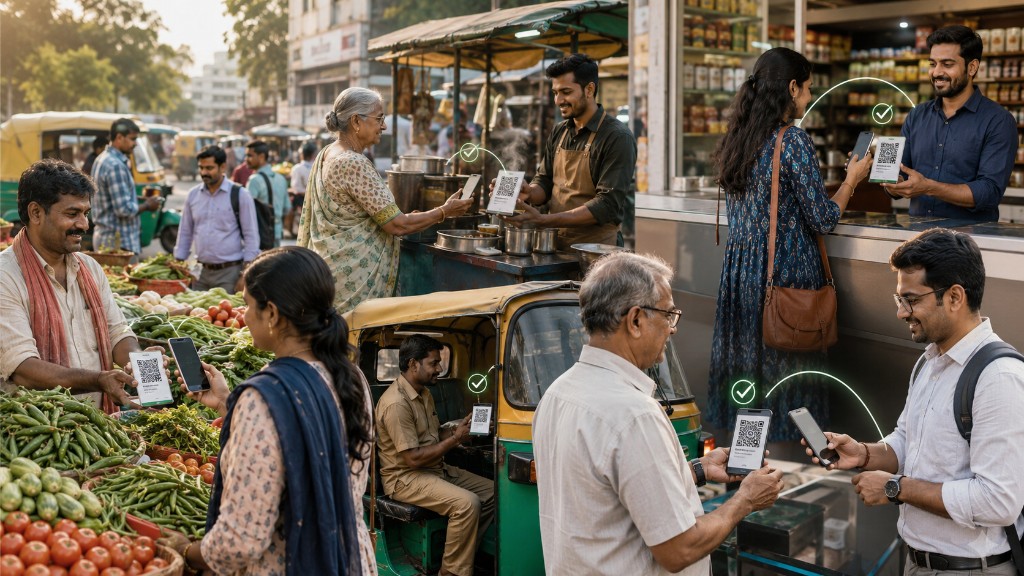
The government's move to monetise UPI after nearly ten years of its introduction needs a review. One argument that propelled the government for such an unexpected move is the pressure from external source ??? the US. The US based card cartels are supposedly exerting political pressure on New Delhi to charge on digital payments so that they also can charge on their payment services.
For a long time, Visa and Master cards ??? the card networks that facilitates payments across banks were not getting business income from their operations due to the presence of zero cost UPI.
Now, with the UPI passing the initial ten-year period, they have got an opportunity to convert India's payment system 'payment based' so that their user-based payment service becomes economically valid.
Through a zero-cost transaction method, the UPI has disrupted the business model of the card cartels.
But in the modern era, where the transaction cost has been significantly reduced due to financial innovations, economics of cards by charging 1 to 3% as charges may not be attractive.
The whole ecosystem has migrated to a low-cost environment supported by blockchain technology and autonomous payment and verification infrastructure.
The government's new policy of charging transactions may not be applicable in a standard manner.
As a beginning, an MDR (Merchant Discount Rate) fee of 0.25% to 0.4% will be charged on transactions above Rs 2,000. Later, it is expected to make applicable to all type of transactions.
Now, there are social and business considerations on charging payments under UPI. Here, it is unfortunate that measuring the social benefits of UPI, including that tempted millions of semi-literate, low digital literate people to embrace digital payments is difficult to estimate. It remains as an intangible benefit.
The UPI's major contribution is not that it helped businesses to make digital payments. Rather its benefit is driving the digital payment and even digital revolution with minimum effort among millions of individuals who were otherwise unwilling to participate in digital payments.
Whether they will continue to make digital payments after its transaction cost becomes applicable is a difficult question. One can say, once people are accustomed to it, they are ready to make payments. Still, there is every chance that people may evade digital payments more compared to the past.
The UPI indeed has done certain development function in India. Its early winding down of social visions is a gamble for the benefit of the card MNCs. Across the world, the US companies are using their political power to threaten the survival of digital payment platforms of the third world. For example, the US has issued warning to Brazil for the continuation of the latter's zero payment platform ??? the Pix.
The working of the UPI so far shows that it is a public good. The platform has strengthened India's Digital Public Infrastructure. It nudged Indians to embrace digital modes while completing transactions and payments. Hence, the economic cost of UPI should accommodate the social benefit it has produced.

Comments
No comments yet.
Please log in to comment.